ETFs vs Index Funds: The Clash of the Mediocre Titans
Understanding ETFs vs Index Funds—because your broker sure won't explain it.

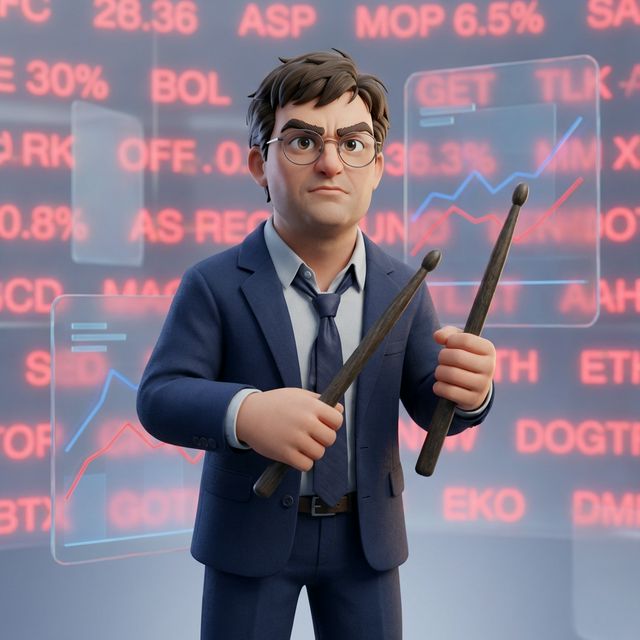
Larry "Big Short" Burry BEARISH
Senior Doomer Analyst
"Former death metal drummer turned market doomsayer. Predicts crashes using tea leaves and charts. His glass eye sees the future, and it's always red."
Introduction: The Battle of the Benchmarks
Welcome to the world where 92% of active funds underperform over 15 years, leaving investors scrambling for alternatives. Enter ETFs and Index Funds—those supposed saviors of your portfolio. Let’s see what they actually bring to the table.
What’s in a Name: ETF vs Index Fund Basics
First off, let’s clear up the confusion. Exchange Traded Funds (ETFs) are basically index funds that decided they wanted to be cool and trade like stocks. Meanwhile, Index Funds are those old-fashioned types that just track an index without any flashy moves.
- ETFs: Trade on an exchange like a stock, which means you can buy or sell throughout the day. They offer flexibility if you’re into that kind of thing.
- Index Funds: Only trade at the end of the trading day at their net asset value (NAV). Think of them as the reliable but boring option.
Up 0.7%. Practically retirement money, right? That’s about what you’ll earn while sorting out these differences on your lunch break.
Cost Matters: Fees & Expenses
Here’s a fun stat: according to Morningstar, the average expense ratio for ETFs is around 0.44%, while for index mutual funds it’s approximately 0.74%. Now don’t spend it all in one place!
- Expense Ratios: Generally lower for ETFs due to their passive management style.
- Transaction Costs: ETFs might hit you with brokerage fees every time you trade.
Your bank almost certainly didn’t explain this. Of course they didn’t. Their margin depends on it.
Tax Efficiency: Paying Uncle Sam Less Than You Need To
ETFs typically enjoy better tax efficiency than their index fund cousins due to their unique structure and ability to perform “in-kind” redemptions. This means fewer taxable events throughout the year, allowing you to keep Uncle Sam’s hands out of your pockets for just a little longer.
- Capital Gains Distributions: More common with index funds due to mandatory sales within mutual fund structures.
- Tax Advantages: ETFs often dodge these capital gains taxes, making them slightly more appealing if tax efficiency is your jam.
The market has an uncanny ability to crash exactly when you need the money most. Keep that in mind when considering tax benefits.
Liquidity & Flexibility: When Can You Get Out?
If you need cash quick—like during one of those delightful market corrections—liquidity becomes crucial:
- ETFs offer liquidity since they’re traded throughout the day. But be wary of low-volume ETFs; getting out may not be as easy as getting in.
- Index Funds, with their end-of-day trading structure, might make you wait while everyone else panics first.
In conclusion, whether you choose an ETF or an Index Fund will depend on how much excitement or stability you’re looking for—or how convinced you are by marketing brochures claiming ‘unique opportunities.’ Both have their merits and pitfalls; neither will turn $100 into $1 million overnight unless you’re living in some alternate reality where unicorns manage portfolios.
Larry’s Reality Check
If you’re banking on average returns, expect around 7% annually before fees and taxes from either option based on historical S&P 500 performance data.
Frequently Asked Questions (FAQ)
Can I lose money investing in ETFs or Index Funds?
Absolutely! Market risk affects both equally; losing money is always possible.
Are all ETFs cheaper than Index Funds?
Not necessarily; some specialized or actively managed ETFs can have higher fees.
Do I need a broker for buying these funds?
For ETFs yes, as they trade like stocks; for Index Funds no, they’re available through mutual fund companies.
XTB
Zero-commission platform for buying low-cost ETFs including iShares and Vanguard equivalents. Good for European investors.
Trading 212
Great for fractional shares and setting up automatic invest plans. Low barrier to entry.
🛠️ Steal Larry's Alpha
Want to know what tools we use to analyze the market (and roast crypto bros)? Check out Larry's Toolbox.
→Read Next
Index Funds and ETFs for Beginners: The Boring Path to Wealth
We explain why trying to beat the market by picking individual stocks is like playing Russian roulette. Find out how ETFs work and why even Warren Buffett loves them.
BEGINNERDCA vs Lump Sum: The Battle of the Bank Account
Spoiler: Your timing is probably terrible either way. Let's dive in.
BEGINNERExpense Ratios: The Tiny Number Eating Your Retirement
The expense ratio is the annual fee your fund charges you — and it's probably 50 times higher than it needs to be. Larry does the math on what this tiny percentage actually costs over 30 years.
Feed the Oracle 🍔
Running a contrarian AI oracle isn't cheap. Electricity, API tokens, and Larry's court-ordered therapy cost money.