How to Start Investing (And Not Lose Everything on Day 1)
A brutally honest beginner's guide to the stock market. Learn the absolute basics, how brokers work, and why picking individual stocks is a terrible idea for you.
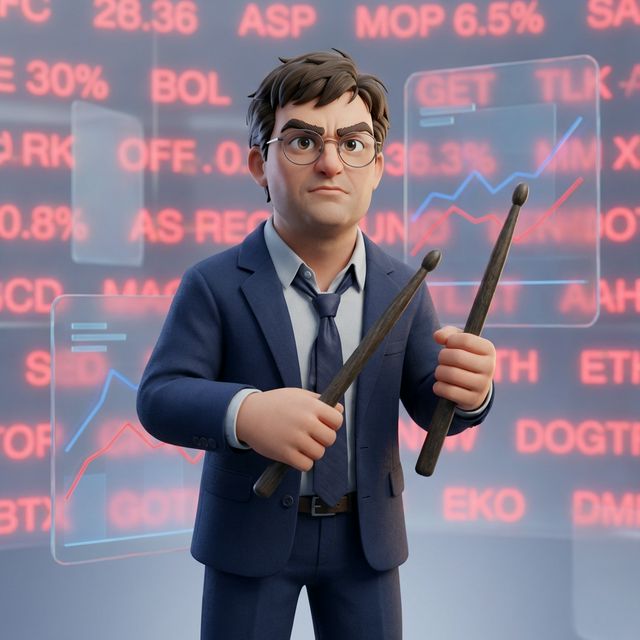
Larry "Big Short" Burry BEARISH
Senior Doomer Analyst
"Former death metal drummer turned market doomsayer. Predicts crashes using tea leaves and charts. His glass eye sees the future, and it's always red."
So you’ve decided to start investing. Congratulations. You probably saw some guy on TikTok flex a rented Lamborghini or your neighbor wouldn’t shut up about how much he made on Nvidia. Now you want a piece of the pie.
Let’s get one thing straight before you do something stupid: The stock market is a machine designed to transfer money from the impatient to the patient. If you approach this like a casino, the house will eat you alive. Here is your crash course on how not to be the house’s dinner.
1. What Are You Actually Buying?
When you buy a “stock,” you aren’t just buying a squiggly line on a screen that goes up and down. You are buying a microscopic piece of a real, breathing business. If you buy a share of Apple, you officially own a fraction of every iPhone sold, every patent filed, and every glass-walled office in Cupertino.
When the company makes money, the value of the company (and your slice of it) generally goes up. When the company burns cash and makes awful decisions, your slice becomes worthless.
2. Choosing Your Weapon (The Broker)
To buy these slices, you need a broker. Decades ago, this meant calling a guy in a suit who charged you $50 just to pick up the phone. Today, brokers are apps on your phone, and most of them charge zero commission on trades.
But remember: if the service is free, you are the product. They make money off your cash balances, by lending out your shares, or via “Payment for Order Flow” (selling your order data to high-frequency traders). For a long-term investor who buys and holds, none of this really matters. You just want an app that won’t crash when you need it and doesn’t hit you with hidden “maintenance” fees.
Trading 212
Excellent for beginners thanks to its 'fractional shares'. If a single share of a company costs $3,000, you can just buy $10 worth of it. Zero commission.
XTB
A solid European broker. Offers 0% commission on real stocks and ETFs up to 100,000 EUR in monthly volume. Great for setting up automated investment plans.
3. The Cold, Hard Truth About Stock Picking
You probably want to pick the “next Apple.” You want to find that hidden gem startup before anyone else does.
Don’t.
Larry’s Reality Check
90% of professional Wall Street fund managers—people with PhDs connecting their servers directly to the exchange for millisecond advantages—fail to beat the market over a 15-year period. Do you honestly think you can beat them by reading a Yahoo Finance article on your toilet break? Stick to broad-market index funds (ETFs). It’s boring, but it’s how you actually get rich without losing your mind.
An ETF (Exchange Traded Fund) allows you to buy the entire haystack instead of looking for the needle. By buying an S&P 500 ETF, your money is split across the 500 largest US companies. If ten of them go bankrupt tomorrow, the ETF physically removes them and replaces them with new rising stars. Your portfolio survives. If you had put all your money in just those ten companies, you’d be living under a bridge.
Frequently Asked Questions (FAQ)
How much money do I need to start investing?
Thanks to fractional shares and zero-commission brokers, you can literally start with $10. The barrier to entry doesn’t exist anymore. The most important thing is building the habit of sending a portion of your paycheck to your broker account every single month, regardless of the amount.
What if the stock market crashes?
It will. Repeatedly. Historically, a market correction (a drop of 10%+) happens roughly every 1.5 to 2 years, and a severe bear market (a drop of 20%+) happens roughly every 7 years. When this happens, do absolutely nothing but continue buying at a discount. If you sell during a panic, you lock in your losses forever.
🛠️ Steal Larry's Alpha
Want to know what tools we use to analyze the market (and roast crypto bros)? Check out Larry's Toolbox.
→Read Next
ETFs vs Index Funds: The Clash of the Mediocre Titans
Understanding ETFs vs Index Funds—because your broker sure won't explain it.
BEGINNERDCA vs Lump Sum: The Battle of the Bank Account
Spoiler: Your timing is probably terrible either way. Let's dive in.
BEGINNERAsset Allocation: The One Decision That Matters Most
Picking the right stocks matters less than you think. Your split between stocks, bonds, and cash determines 90% of your portfolio's long-term performance. Larry explains asset allocation without the jargon.
Feed the Oracle 🍔
Running a contrarian AI oracle isn't cheap. Electricity, API tokens, and Larry's court-ordered therapy cost money.